
The Short Answer: What to Ask Before You Choose a Design
Before you settle on a low voltage landscape lighting design, get straight answers to five things: what you want the lights to do, how many fixtures your transformer can run without dimming them, whether you're starting fresh or converting an older high-voltage system, where the wiring will run and how it's protected, and who will maintain it once it's installed. Answer those first and picking fixtures and a layout gets much easier. The rest of this guide works through each question, plus a couple that tend to come up once you start planning for real.
What Do You Want the Lighting to Do First?
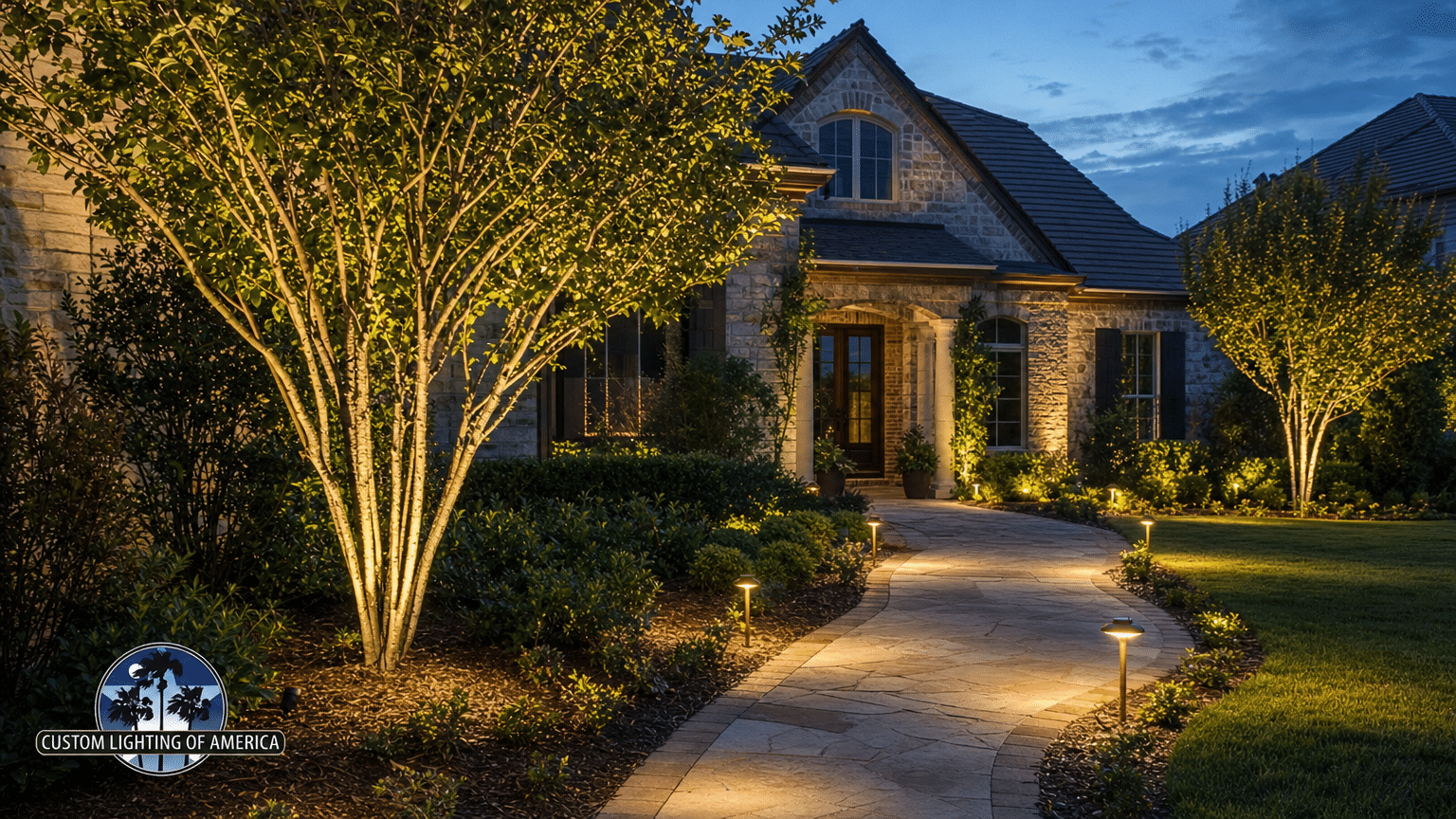
This sounds obvious, but it's the question most people skip. Lighting a front walk for safety is a different design than lighting a tree for effect, and a plan that tries to do both without a clear priority usually does neither well. Pick the top two or three jobs you want the lighting to handle — safer steps and paths, a tree or garden bed you want to show off at night, or more usable time on the patio after dark. That priority list drives fixture type, placement, and how many zones the design needs.
What Fixture Types Fit the Job?
Once you know the job, the fixture choice mostly follows. Path lights sit low and spread light downward, right for walkways and garden edges where you want to see your footing without glare. Uplights (also called spotlights or well lights) sit at the base of a tree, column, or architectural feature and aim up, creating a shadow-and-texture look rather than a flat wash of light. Step and deck lights mount directly into a riser or rail, which matters where a surface-mounted fixture would get kicked or caught underfoot. Mixing types is normal — most real designs use two or three — but each fixture should be doing a specific job, not just filling a gap in the layout.
How Many Fixtures Can One Transformer Actually Run?
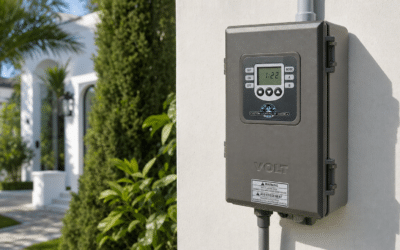
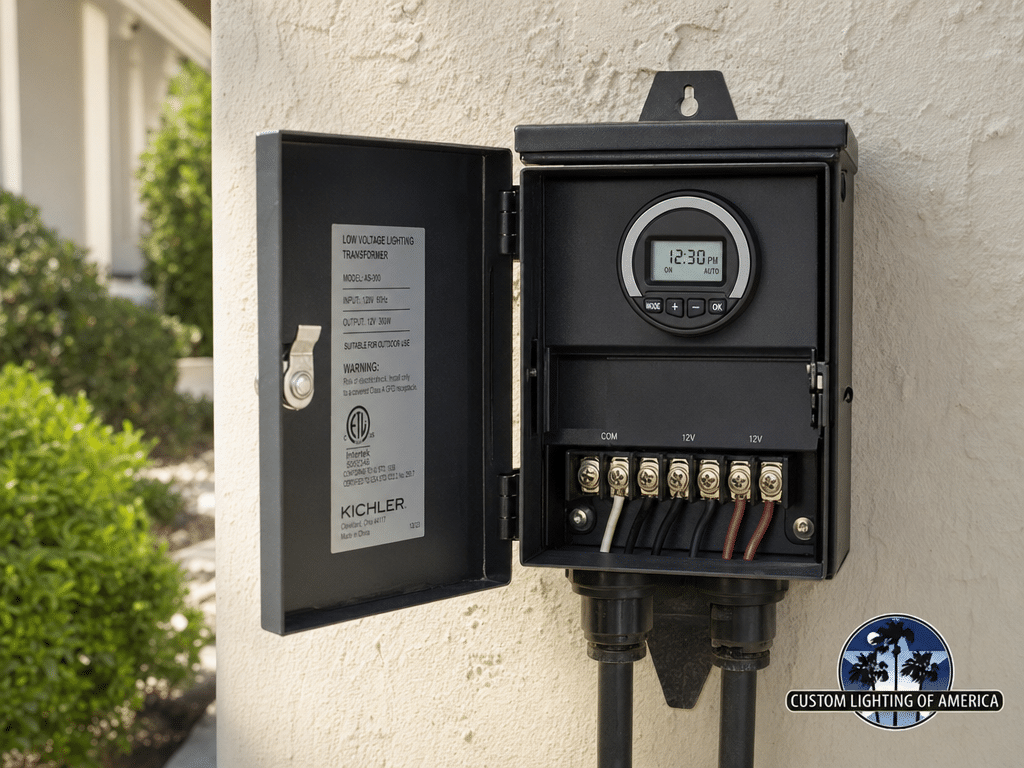
Every low voltage transformer has a wattage capacity, and the number on the box isn't the number to design right up to. Loading a transformer close to its limit shortens bulb life and can leave fixtures at the far end of a run dimmer than ones near the transformer — a problem called voltage drop, which gets worse the longer the wire run is. A good design accounts for both the total fixture load and the distance each run travels, not just how many fixtures fit on paper. It's also worth leaving some wattage headroom beyond what your current plan needs — adding even one or two fixtures later is far easier if the transformer isn't already loaded to capacity. If you're unsure whether your plan fits comfortably under one transformer or needs to split across two, ask before you buy fixtures, not after.
How Many Zones Does Your Design Need?
A zone is a run of fixtures controlled together — front walkway on one, backyard patio on another, an accent tree on a third. Zoning isn't about adding wire for its own sake. It lets you run path lights every night on a timer while keeping tree uplighting on a shorter schedule, or keep one zone's load light enough that voltage drop isn't a concern even on a long run. If your yard has distinct areas used differently — front versus back, or a feature you only want lit on certain evenings — that's usually a sign the design needs more than one zone rather than one long run trying to cover everything.
Does Your Project Need a New Low Voltage System, or a Conversion?
If your home already has an older high-voltage landscape lighting system — the kind that runs on standard household current instead of a transformer — you don't necessarily need to start over. CLA Lighting handles converting an existing high-voltage system to low voltage LED, which is often more practical than ripping everything out. If you're still deciding whether low voltage is the better fit for your property, it's worth reading through the benefits of low voltage lighting before you lock in a design.
Where Will the Wiring Run, and Is It Protected?
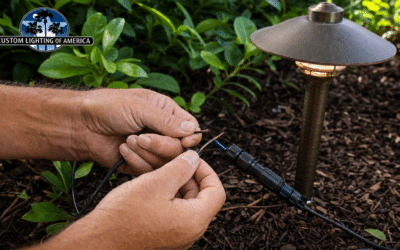
Wire routing is a design decision, not an afterthought. Ask where cable will run relative to irrigation lines, where future garden beds might go, and whether it crosses an area that gets mowed, edged, or dug into regularly. Wire buried shallow or left exposed near a bed edge is the most common reason a working system stops working a season or two later. Planning the path up front, with enough slack and depth in the right places, saves a repair call down the line.
Who Keeps It Working After It's Installed?
Low voltage systems are generally low-maintenance, but not maintenance-free. Bulbs fade, connectors corrode, and fixtures can shift after a hard freeze or heavy yard work. Settle who you'll call for routine maintenance — and who to call if something stops working altogether — before installation, not during a troubleshooting call at 9pm. If a fixture goes dark or a zone dims unexpectedly, diagnosing and repairing low voltage landscape lighting usually starts with checking the transformer, the connections, and the wire run in that order — worth knowing even if you plan to call in help.
A Quick Example: Putting the Questions Together
Say your main goal is a safer front walkway and a better look at the tree near your porch. That priority points toward path lights along the walk and one or two uplights at the tree's base — not a dozen scattered fixtures. You'd check that both runs fit comfortably under your transformer's capacity, with room to spare for a future addition, since the tree uplights likely sit farther from the transformer than the walkway lights. Because the walkway gets used every evening and the tree is more of an accent, it makes sense to put them on separate zones. And before any wire goes in the ground, you'd map the route around existing garden beds and irrigation lines. None of that is guesswork — it's working through the questions above, for your specific yard.
Is It Worth Talking to a Professional Before You Buy Fixtures?
If you're confident on purpose, fixture type, transformer sizing, zoning, and wire routing, you may be ready to move forward on your own. If any of those still feel uncertain, it's worth a conversation before fixtures get ordered — a design sized and routed correctly the first time is cheaper than one reworked after installation. A short conversation can also catch things you might not think to ask about on your own, like how shade patterns across your yard change the way uplights read at night. CLA Lighting designs low voltage landscape lighting systems and can walk through fixture choice, transformer sizing, and layout for your specific property.
Questions and answers
Can I convert my existing high-voltage landscape lighting to low voltage?
In many cases, yes. CLA Lighting converts existing high-voltage systems to low voltage LED, which can be a more practical option than replacing the whole system from scratch.
How do I know if my lighting needs repair instead of a new design?
If fixtures are dim, flickering, or dark but the layout still does what you want, it's usually a repair or maintenance issue rather than a design problem. If the lighting no longer fits how you use the yard, that's a sign it's time to rethink the design itself.
If you're still working through fixture count, transformer sizing, or wiring layout for your property, contact CLA Lighting to talk through your design before you buy anything.