
Do You Need a License to Install Landscape Lighting in Florida?
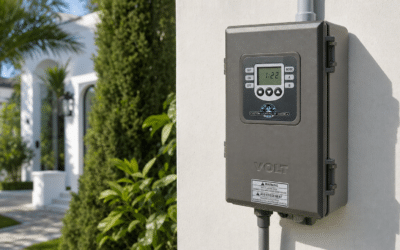
It depends on which part of the job you mean. Landscape lighting almost always runs on a low-voltage system: a transformer steps your home's 120-volt household current down to 12 volts, and everything downstream of that point — the cable, the fixtures, the connections buried in your beds and along your paths — operates at a voltage low enough that most Florida municipalities treat it differently from standard household wiring.
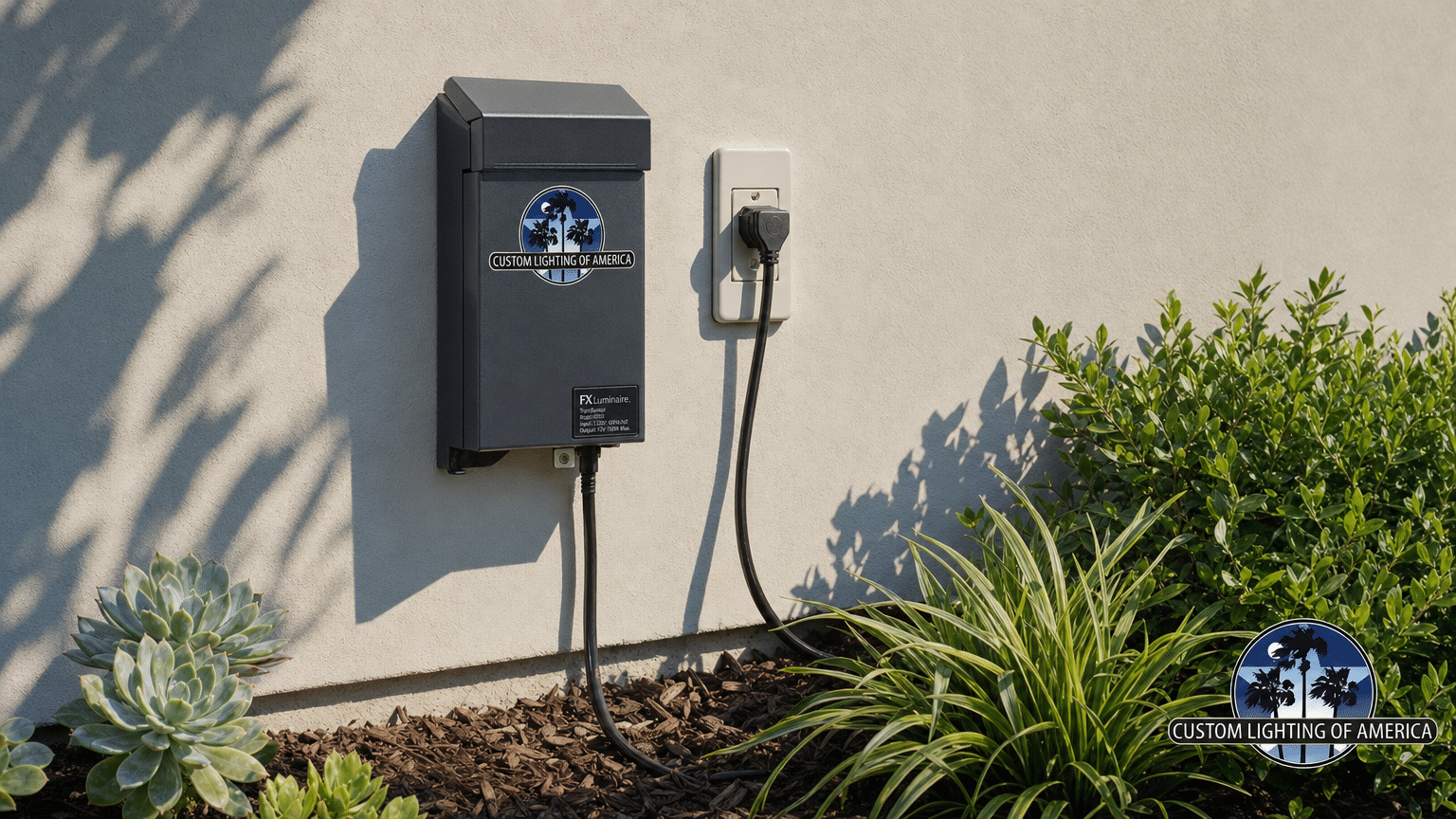
The part that does fall under electrical code is the connection itself: wiring or plugging the transformer into your home's power supply. That step is line-voltage work, and it's where local electrical code and any licensing requirements actually come into play. Requirements can vary by county and city, so if you want a definitive answer for your specific property, your local building department is the authority to ask.
Low Voltage vs. Line Voltage: Why the Distinction Matters
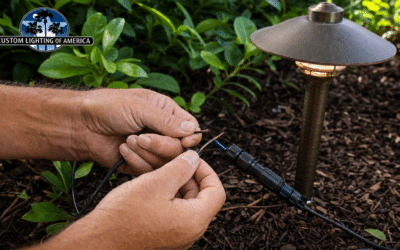
Low-voltage landscape lighting (typically 12 volts) is the standard for outdoor fixtures because it's safer to run through soil, mulch, and areas where people and pets walk, and it doesn't carry the same risk as household current. That's why most of the system — the wiring in the yard, the fixtures, the connectors — isn't regulated the same way a home's internal electrical wiring is.
The transformer's connection to your house is different. That outlet or junction needs to be installed correctly and, depending on your jurisdiction, may need to meet specific code requirements for outdoor electrical connections, including GFCI protection. This is the one part of a landscape lighting project where "low voltage" stops applying and standard electrical rules take over.
What a Professional Installer Handles For You
A properly planned low-voltage system accounts for transformer placement, cable gauge sized to the run length, burial depth, and weatherproof connections that hold up in Florida's humidity and rain. Getting these details right is what separates a system that still looks good in a few years from one that starts flickering or failing early.
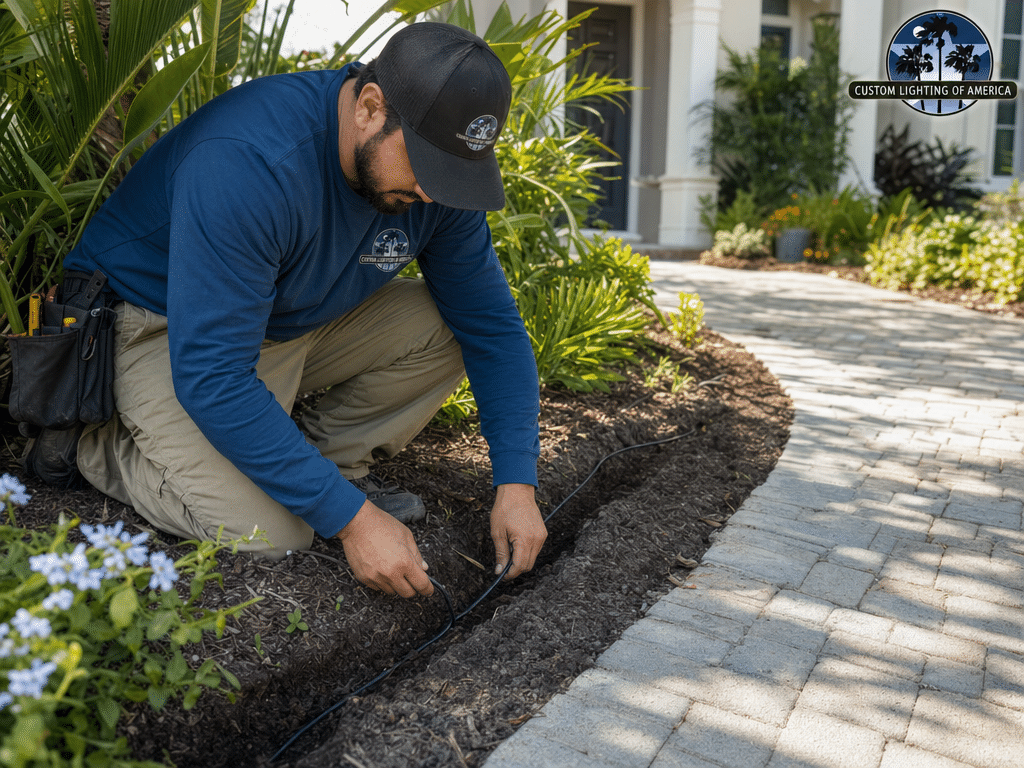
Voltage drop is the clearest example of why planning matters. Thinner cable run over a long distance loses more voltage along the way, so a fixture at the far end of a 150-foot run on undersized wire can end up noticeably dimmer than one positioned close to the transformer. Transformers are also rated for a maximum wattage load, and adding more fixtures than a transformer can handle is a common reason an otherwise well-installed system underperforms. None of this touches licensing — it's a design and installation question — but it's exactly the kind of detail worth asking about before you commit to a quote.
If you want to see how a custom landscape lighting installation is actually planned and built, from transformer sizing to fixture placement, that's a useful next read before you start getting quotes.
A Common Scenario: Reusing an Outlet vs. Adding a New Circuit
Here's how this usually plays out in practice. Many homes already have an outdoor GFCI-protected outlet near a patio or on an exterior wall — left over from holiday lights, a pressure washer, or a previous lighting system. If that outlet sits close enough to where the new transformer needs to go, a qualified installer can often use it directly, and there's little or no additional line-voltage work beyond confirming the outlet is sized and protected correctly for the load.
The scenario changes when the best transformer location doesn't have an outlet nearby — the back of a large lot, or a spot that needs a second transformer to avoid overloading the first one. In that case, a licensed electrician typically needs to run a new circuit from the panel, and that's the kind of work that may require a permit and an inspection depending on the city or county. It's also where a project can run longer or cost more than a homeowner expected, simply because it wasn't accounted for at the planning stage. Asking at the quote stage whether your layout can use an existing outlet or will need a new circuit avoids that surprise later.
Permits and Codes Vary by City — Ask Before You Assume
Because landscape lighting licensing and permit requirements are set locally rather than by one blanket state rule, what applies in one South Florida city may not be identical in the next. The safest approach is to ask directly: does this project need a permit here, and does the person doing the electrical connection need to be a licensed electrical contractor?
If a permit is required, it's also worth asking who pulls it and who schedules the inspection — a professional handling the electrical connection should be able to answer both without hesitation. A reputable installer should be able to answer that for your specific address without hesitation. If you're comparing installers and want to understand what that conversation should sound like, our South Florida landscape lighting consultants page covers how a proper consultation works.
Getting a Straight Answer for Your Property
The honest version of this answer is: the low-voltage portion of your landscape lighting almost certainly doesn't require a license, but the connection point back to your home's power does fall under local electrical code, and the specifics depend on where you live. Rather than guessing, ask whoever is quoting your project to walk you through exactly how they handle that connection and whether a permit applies.
If you're in Palm Beach and want that conversation with people who design and install these systems locally, our Palm Beach landscape lighting team can walk through what your project actually needs.
Questions and answers
Does the transformer need to be plugged into a GFCI outlet?
Outdoor electrical connections, including landscape lighting transformers, are commonly required to be on GFCI-protected circuits because they're exposed to moisture. Whether this is strictly required for your property depends on local code, which is a question for your local building department or the professional wiring the connection.
Can I install landscape lighting myself without hiring anyone?
Many homeowners run low-voltage cable and set fixtures themselves once a transformer and a properly wired outlet are in place. The transformer connection to household current is the part worth having a licensed electrician handle, since that's the step covered by electrical code rather than low-voltage wiring rules.
Do I need a permit for landscape lighting in Florida?
It depends on your city or county and on what the project involves. Some jurisdictions require a permit for new outdoor electrical circuits even when the rest of the system is low voltage. Checking with your local building department before work starts is the only way to know for certain.
If my house already has an outdoor outlet, does that mean I don't need an electrician at all?
Possibly. If an existing GFCI-protected outlet is close enough to where the transformer will sit and is sized for the load, an installer can often use it without new line-voltage work. An electrician typically only becomes necessary when no suitable outlet exists near the planned transformer location and a new circuit has to be run.
What's the difference between a landscape lighting company and an electrical contractor for this kind of project?
A landscape lighting company typically handles the design, fixture selection, low-voltage layout, and cable runs. The line-voltage connection — wiring the transformer into your home's power — is electrical-contractor work. It's worth asking any installer you're considering how they handle that handoff: some coordinate directly with a licensed electrician on your behalf, others expect the homeowner to arrange it separately.
If you're planning a landscape lighting project in Palm Beach and want a straight answer on what your property needs, reach out to CLA Lighting's Palm Beach team to talk through the details.